

MP3 CD Format
The New York Times bestselling author and senior fellow at the Discovery Institute blends science and religion in this thoughtful guide that teaches modern believes how to use the leading wellness trend today–intermittent fasting–as a means of spiritual awakening, adopting the traditions our Christians ancestors practiced for centuries into daily life.
Wellness minded people today are increasingly turning to intermittent fasting to bolster their health. But we aren’t the first people to abstain from eating for a purpose. This routine was a common part of our spiritual ancestors’ lives for 1,500 years.
Jay Richards argues that Christians should recover the fasting lifestyle, not only to improve our bodies, but to bolster our spiritual health as well. In Eat, Fast, Feast, he combines forgotten spiritual wisdom on fasting and feasting with the burgeoning literature on ketogenic diets and fasting for improved physical and mental health. Based on his popular series “”Fasting, Body and Soul”” in The Stream, Eat, Fast, Feast explores what it means to substitute our hunger for God for our hunger for food, and what both modern science and the ancient monastics can teach us about this practice.
Richards argues that our modern diet–heavy in sugar and refined carbohydrates–locks us into a metabolic trap that makes fasting unfruitful and our feasts devoid of meaning. The good news, he reveals, is that we are beginning to resist the tyranny of processed foods, with millions of people pursuing low carb, ketogenic, paleo, and primal diets. This growing body of experts argue that eating natural fat and fasting is not only safe, but far better than how we eat today.
Richards provides a 40-day plan which combines a long-term “”nutritional ketosis”” with spiritual disciplines. The plan can be used any time of the year or be adapted to a penitential season on the Christian calendar, such as Advent or Lent.
Synthesizing recent science with ancient wisdom, Eat, Fast, Feast brings together the physical, mental, and spiritual benefits of intermittent fasting to help Christians improve their lives and their health, and bring them closer to God.
Read more
10 reviews for Eat, Fast, Feast: Heal Your Body While Feeding Your Soul-A Christian Guide to Fasting
Add a review
Related products

Alternate Religion

Alternate Religion
Reading God’s Word 2026: Daily and Sunday Mass Readings Church Year A

Alternate Religion
The Messianic Legacy: Secret Brotherhoods. The Explosive Alternate History of Christ

Alternate Religion

Alternate Religion
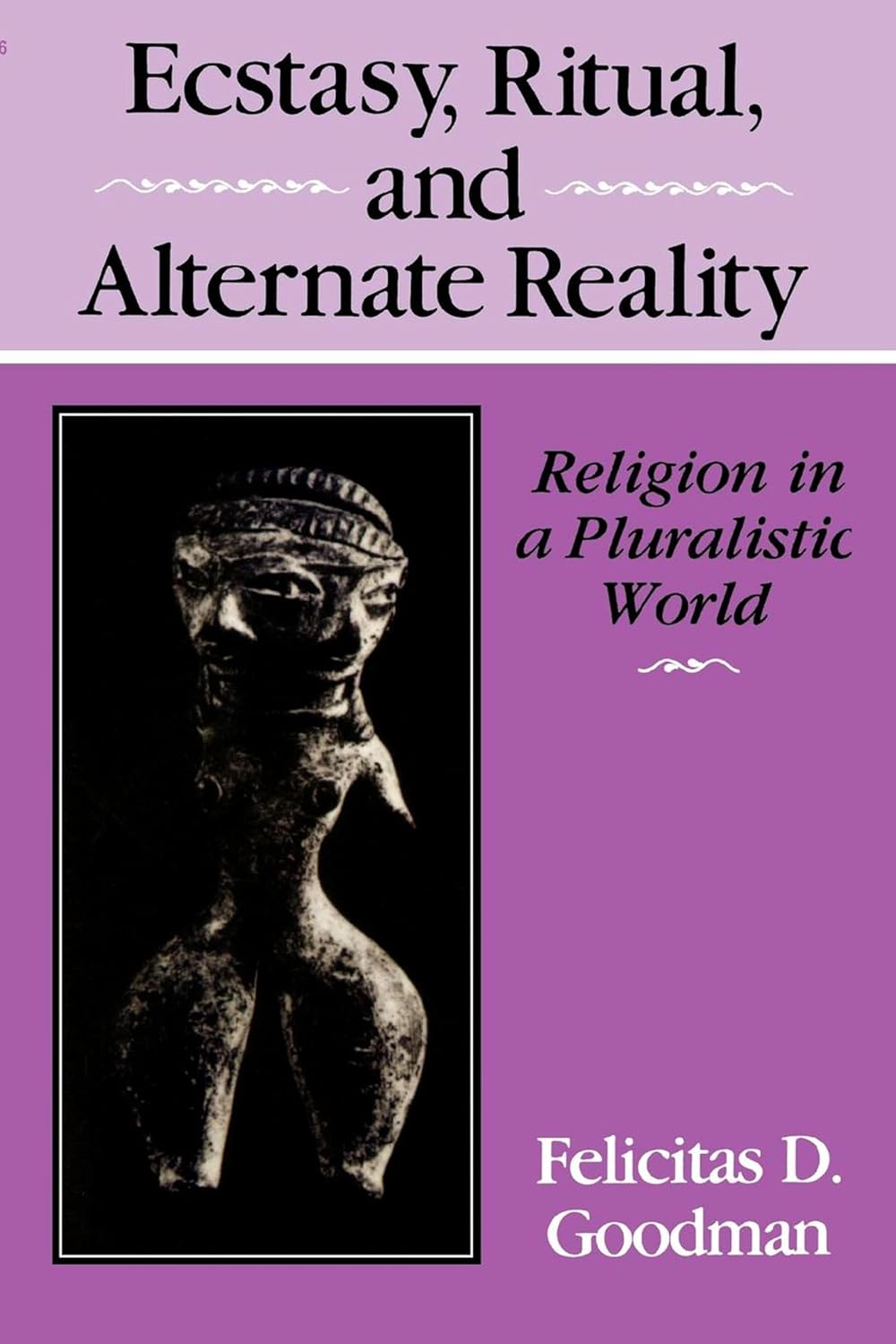
Ecstasy, Ritual, and Alternate Reality: Religion in a Pluralistic World

Alternate Religion
Jesus Was an Airborne Ranger: Find Your Purpose Following the Warrior Christ
Laura –
I came across this book on Facebook in a group I am in. Someone had recommended it, so I went ahead and order it. It sat on my bookshelf for a couple months before I looked inside. At the time, I didn’t really plan on making any major lifestyle changes. The author breaks down a week by week plan for 6 weeks to get you used to a fasting and ketogenic lifestyle/diet. After reading through week one, I figured what the heck I will try it. I didn’t believe I would have made it this far though! This book is faith based, but can still be beneficial to anyone interested in learning to fast for other the physical benefits.
I lost 20 lbs in five weeks with minimal exercise. I broke my sugar addiction that I have had for years, and have stopped craving carbs. I no longer get “hangry” and my hunger is felt only in my stomach. Before, I would start feeling light headed, queasy, irritable after not eating only for a few hours. Now I am able to fast for several days and feel amazing! I feel more focused, and have less “brain fog.”
I was on antidepressants for a year, and had made several attempts to wean off but would start feeling anxious right away. Two weeks into following the author’s plan I decided to try again. I am now successfully off of Lexapro, and I feel great! Might I add that it is the middle of a pandemic! I had learned that up to 90% of serotonin is produced in the gut, and now that I am eating better and fasting I would guess serotonin production has naturally increased.
Order this book you have nothing to lose except weight and so many benefits to gain!
Clare –
I loved the author’s historical review of fasting as a spiritual practice. The nutrition input was very detailed and supported his recommendations about fasting, especially intermittent fasting which he emphasized. This book will help any reader think about fasting from a broader perspective–particularly to see the dramatic health benefits that can result from a spiritual practice.
Trevor Rolls –
Dr. Richards truly hit a home run with Eat Fast Feast. On the one hand, his training in analytic philosophy shines through in his approach to researching and presenting the scientific and medical functions and benefits of fasting. On the other hand, the theologian in him presents compelling, encouraging, and an otherwise Scriptural case for the spiritual call and need for fasting. The thread tying these two approaches together is his personal journey with fasting as both a physical and spiritual discipline. Below, I will try to give a concise review following the “Good, Bad, and Ugly” format.
The Good
One of the best things about this book is that it is extremely readable. Since 2016, as a university student, I read at least two books a month (not counting books for personal interest). Many of these books are simply time consuming to read. They have terribly complex syntax, ridiculously small font, and an equally ridiculous number of pages per chapter. Conversely, I read Eat Fast Feast in under a week (under 10 hours total). Dr. Richards uses clear and simple language whenever possible, without any bravado or unnecessary academic speak. Also, the font is comfortably large, the line spacing is nice, and the chapters are relatively short.
A second good point is that he’s not trying to sell us anything. He’s not trying to make his living by marketing the Jay W. Richards Physically Spiritual Approach to Ketogenic Eating and Intermittent Fasting. To the contrary, he is simply trying to share something that has benefited himself greatly, for the purpose of showing people they too can make this thing that seems so hard easier to do and that it will boost their spirituality as well as benefit their body.
A third good point is that Dr. Richards consistently alternates between science and health aspect to fasting, and historical and spiritual aspects. There isn’t much in the way of opinion or conjecture either. While not bogged down with foot notes, Richards provides sourced research and studies to support his presentation of the health benefits to fasting. Additionally, when presenting spiritual perspectives, he uses adequate and appropriate Scriptural citations, along with an informative inclusion of many historical practices of not only the church, but other religions throughout the ages.
Fourth, the book isn’t solely about fasting. It is also about eating and feasting. This statement should stand alone without explanation, but simply put, it isn’t just about mastering your body and spirit by denying it control over when you eat, but also about good and healthy pattern of eating during normal times, as well as good and healthy times of feasting.
For my fifth and final good point (although I could include many more) Dr. Richards writes to Christians of all stripes. While he himself is Catholic, and certainly speaks of Catholic traditions, his main point for Christians is that no matter what denomination one is, they are totally capable of fasting–and they absolutely should.
The Bad
I really don’t have anything bad to say about this book. Certainly, Dr. Richards could have perhaps gone deeper on some topics. Then again, this could easily been three or four books.
Perhaps the one thing that is a negative is that a companion guide would have been nice. The book presents a six-week plan which switches dietary focus and works through a progression of fasting. While all the information for basic dietary needs, fasting protocol and schedule are present in the book, it would be more convenient to spend a few bucks on a little companion book to have all that stuff readily handy.
The Ugly
I actually like this part because Dr. Richards is no stranger to writing and speaking on topics that, frankly, can get ugly. I have watched him give talks on climate, the fine tuning of the universe, and intelligent design, and I know he has much more material out there that I haven’t read or watched. The point is, he’s not afraid to talk about things that come with controversy. And he does so in this book.
Fasting itself is controversial. Many Christians simply don’t do it, even though it is clear and present in Scripture (and Richards points this out). Also, many people believe it just is not a good way to live a healthy lifestyle. Dr. Richards discusses many finer points of both of these aspects. So, it should go without saying that what he presents stands in direct contrast to what others may think, believe, or practice on the subject.
Conclusion
This book is more than worth its cost; buy it. As one who has studied fasting as a health benefit for a couple years, and has been training academically in theology for a few years; this book nails these two areas together in a way that is engaging and invigorating.
Amazon Customer –
It helped me understand the blessings of having a meal on my table and the meaning of fasting as an offering.
lauraln –
I read this book spring/summer of 2022. I wanted to know more about fasting as a Christian discipline, and I am a health foodie. First of all, the book was a very enjoyable read. I most appreciated the author’s combination of real science, history of fasting, and spiritual insights. I love how the plan fits into a Lenten cycle. He gives the reader a great plan to implement this into real life. And I love how he gives these tools to help one live a life of fasting and feasting in perpetuity.
Fast forward to Lent 2023. My husband and I both decided to commit to the plan as a Lenten discipline. We were both a little nervous; we rarely skip meals and have never tried a keto diet, although we eat a very clean diet in general. We love bread. But we have been delighted and amazed at the way this has shaken out. The health benefits have been numerous. Our food budget has had a boost even with all the avocadoes we are buying. We have been able to focus on prayer. And while we miss the ritual of mealtimes during the fasts, hunger itself hasn’t really been a problem. I am so much more grateful for my food when it is time to eat. On the Sunday mini-fasts my raspberries have never tasted so good.
We plan to make it a yearly plan together, and I plan to implement the same tools from time to time throughout the year in accordance with ember days, Advent, and other times where fasting makes sense in the Christian year. I highly recommend doing it with a close friend or spouse.
In artistic terms, fasting and feasting in this way creates greater contrast and drama in the picture of one’s life. Rather than pale gray-tone, you get bold darks and lights, which makes life more beautiful.
Sam C –
I was quite disappointed buything this book. It is NOT a general Christian guide to fasting, in any way shape or form.
Basically, it’s a very niche book. If you’re (a) Roman Catholic, (b) you want to learn about extreme ketogenic diet, and (c) for exercise you want to do HIIT training, this is probably a helpful book. Otherwise, not really.
Sam C –
I was quite disappointed buything this book. It is NOT a general Christian guide to fasting, in any way shape or form.
Basically, it’s a very niche book. If you’re (a) Roman Catholic, (b) you want to learn about extreme ketogenic diet, and (c) for exercise you want to do HIIT training, this is probably a helpful book. Otherwise, not really.
Karen –
I bought this book with excitement after reading articles by the author on The Stream in which he talked about the spiritual advantages of fasting. I had hoped a book subtitled “A Christian Guide to Fasting” would have a lot more depth to the Christian history and practice of fasting. Yet these are things he mentions in brief surface chapters and doesn’t really delve into, at least not in the way he delves into the biology of fasting. As the author mentions, Eastern Orthodox Christians have practiced significant fasting for centuries, and yet he doesn’t describe or go into their practices, aside from publishing a table of their fasting calendar. For example, I would like to have known about the Orthodox rationale of abstain from olive oil and wine on some days and not others. He mentions that there are a lot of Christian practices, and the reader is apparently supposed to be inspired to do the rest of the research of that on our own. The author’s enthusiasm and personal stories are MUCH more lengthy and detailed about the physical health benefits to the practice of intermittent fasting. So far in the book, I haven’t read a single story in which he discussed his fasting as something he did for PRIMARILY for a spiritual purpose (and I don’t mean Church communal fast days that he participates in), e.g. for prayers for healing for someone else, or for himself,, and what his experiences of fasting have done for his spiritual life and growth. Honestly, his true focus seems to be on the intermittent fasting lifestyle and its physical health benefits, and the appeal to Christians seems to be another angle to sell it as good for us rather than the central topic I hoped it would be. He goes into a lot of (boring) detail about hormones, etc. as well as a week by week plan to get into intermittent fasting and its challenges, yet does not go nearly into the same kind of depth about spiritual preparation for fasting and how to deal with spiritual challenges, I feel frustrated and disappointed, especially because I think the premise of Christians regaining fasting and prayer as an important spiritual practice is such an important one. I hope if he does a 2nd edition, he will “fatten” the spiritual side of the book.
mary buckler –
This is book is beautifully. Rubbed
Elizabeth Horban –
Excellent alternative to dieting. I lost weight and lowered my A1C.