


Thomas Doane’s thorough examination of Old and New Testament Biblical myths and legends, drawing parallels to stories belonging to older traditions, such as those of ancient Egypt.
The central purpose of the text is to unite, in a single compendium, analysis of all the Bible myths which bear resemblance to earlier tales. Doane’s system is practical; the myths are recounted, examined and compared against their apparent forebears in chronological order. The purpose is to demonstrate that religions share much in common with one another; while their themes and the names of figures change, the character of the tales and legends remains similar or even identical across centuries of lore.
At the outset, Doane acknowledges that very little of this book is entirely original; what is special and unique to this work is its arrangement, and the systematic, readable manner in which the subject is tackled. Each chapter is amply annotated, that the reader may consult both the Bible and surviving texts of other religious works, plus previous scholarly researches into ancient mythologies.
Perhaps most controversially, Doane focuses upon the tale of Christ. His birthplace, the events in which he was involved, the subject and message of his sermons, and his untimely death upon the crucifix are shown to mirror aspects of previous stories concerned prophets or holy men of other religious traditions.
Read more
12 reviews for Bible Myths and Their Parallels in Other Religions: Being A Comparison of the Old and New Testament Myths and Miracles with Those of Heathen Nations … Considering Also Their…
Add a review
Related products

Alternate Religion


Alternate Religion
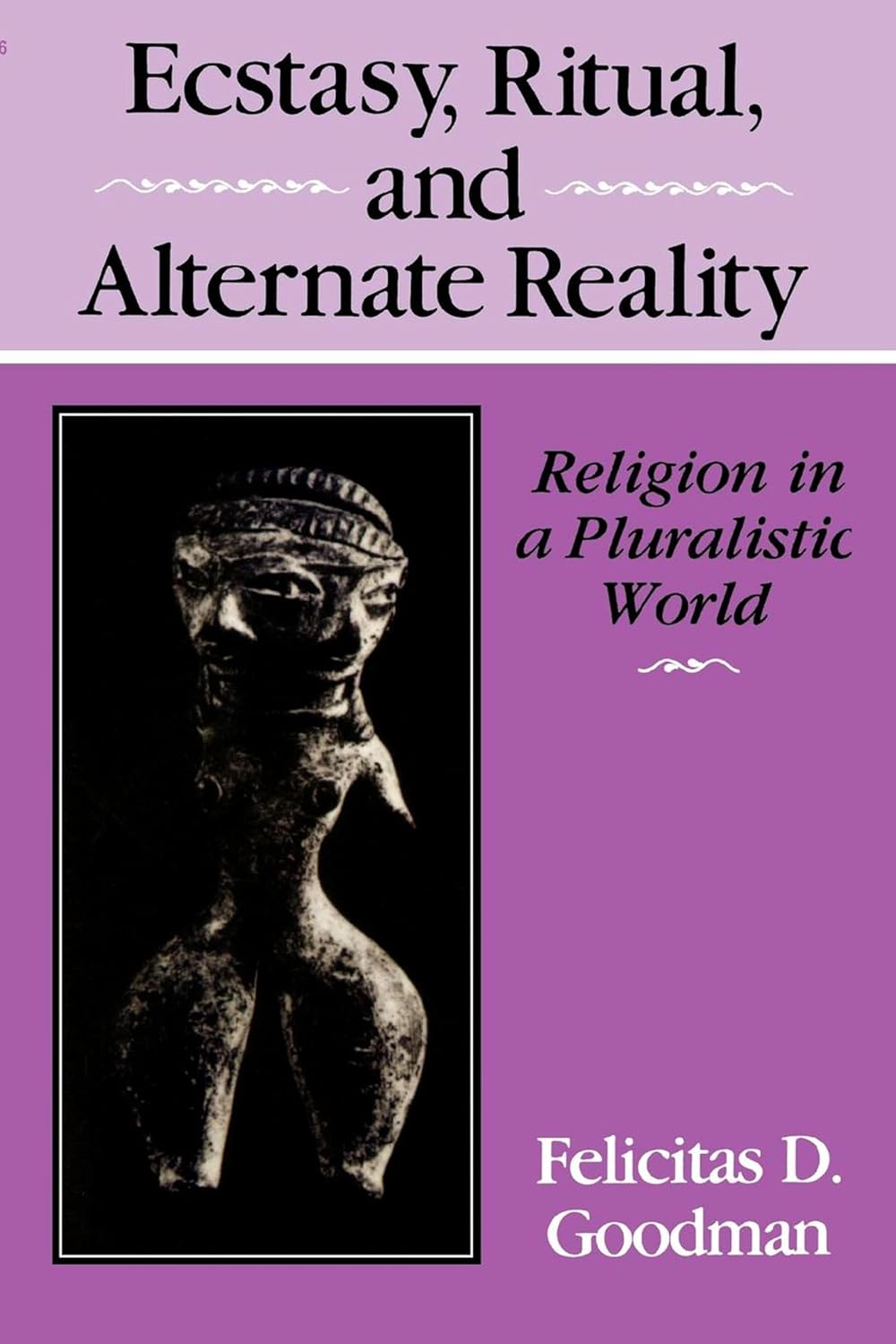
Ecstasy, Ritual, and Alternate Reality: Religion in a Pluralistic World

Alternate Religion
Theological Foundations Alternate Edition: Alternate Edition

Alternate Religion
Liars For Jesus: The Religious Right’s Alternate Version of American History Vol. 1

Alternate Religion

Alternate Religion
Gregg K. –
If we are going to believe something, we have to understand what we are believing in. And where it came from. The chaff has to be separated from the grain.
Amazon Customer –
I got bored with this book. It was very interesting that all religions have the same story, told many different ways. I enjoyed that part of it, but I did not finish the book. As I said, I got bored.
Victor Bourne –
Although this is a very old book, it is still valid today. For me, it has been a real eye-opener. Being an atheist of long standing, I have read much about religion, especially Christianity, and its dire effect on human progress, but I had not realised just how all religions are deeply related. No doubt, since the book was written much research has revised details, but the overall sweep of the narrative, and the conclusions the author draws, form a sound basis for further exploration of a fascinating subject.
Owska –
Il libro mi è arrivato pieno di grasso di dita sulla copertina e anche dietro, e presenta anche una certa patina bianca di non so cosa e non voglio saperlo. Ovviamente non mancano le orecchie, e parte di colore sul retro venuto via. Dando un’occhiata all’interno stona tantissimo la stampa; alcune lettere nella stessa parola sono in grassetto scuro e altre no rendendo difficile la lettura soprattutto quando le parole sono scritte in caratteri minuscoli nelle note. Armatevi di un buon paio di occhiali, di una lente di ingrandimento o di un microscopio perché non sarà una facile impresa finirlo, soprattutto perché frasi intere sono così piccole e scure che sembra alfabeto morse, e non lo dico per fare la battuta.
Ed Barton –
Written a century or more ago, the book is a look at the similarities between religions and mythologies – focusing on the Judeo-Christian comparison to other regions and religious traditions. There’s a lot to unpack here – all of it solidly cited, researched and cross referenced. The premise of the author is that modern Christianity is an amalgam of multiple historical legends with little archaeological or contemporary support. A compelling and interesting read.
A Writer –
An excellent reference work that definitively shows how the fables that make up the bible came about, from far more ancient sources and cultures, and were not in any way divinely inspired by any deity. I highly recommend this work to any free thinker, or those who question the dogma of judaism and the many sects of what is called ‘christianity’.
Israel Drazin –
The 1882 easy to read book “Bible Myths and their Parallels in other Religions” is fascinating. We read about Hebrew Bible and New Testament events, laws, comments, and more, and are told that very similar ones appear in other ancient cultures that existed before the Bibles were composed, often with the same details.
Some of the events are: creation, flood, tower of Babel, Jonah and the big fish, miraculous birth of Jesus, genealogy of Jesus, the trinity, and many more.
The similarities do not conclusively prove that the Bibles copied the former versions. Nor does it suggest that the biblical versions existed orally before they were written and the pagan documents copied the biblical ones. It proves nothing. But the similarities do cause us to think about what is recorded in the Bibles and helps us gain deeper insights. So too do the slight differences between the two help us see the significance that the biblical writers gave to their version.
Nicole Nadeau –
T. W. Doane went through a lot of pain and research for this book (hence the thickness of this book). Different sections of the Bible are dissected and explained at great length and the parallel are drawn from much older stories that come from ancient civilizations. There was much inspiration to be drawn upon my neighbouring countries such as Egypt, ancient Greece, Chaldeans/Sumerians/Assyrians, Persians etc. The symbolism and the significance of these (and the origins) are also mentioned it.
I did learn quite a bit and it made me curious to learn more about the histories of other civilizations.
Despite the writing style being dated, I found it fairly easy to understand.
Edit July 2021 :
Now that I have gain a deeper understanding on other religions & myths, I amend my rating to 3 (i’d give it a 3.5 but I can’t and a 4 seems too generous).
For one, some of the said similarities mentioned about other deities/legends of other religions, I could find no mention of (eg . Krishna having died on a tree, Mithras death & resurrection, Zarathustra descending to hell…)
Having said that, I get the sense that the author had personal motive that lead him to desperately search for any sources of sited examples to make a point. But there was no need to as there is sufficient sources of real similarities to derive a conclusion from.
It is still well an interesting read but when you have to cross-check the sited examples, it becomes quite an exercise.
Lawrence A. Beer –
The subject of religion is one of the most explored areas in literature evoking emotional responses that touch all faiths. The Doane book is unparalleled in its presentation of the evolvement of myths and legends into the sacred texts used by numerous religions to establish their separate identities. One learns that no faith was derived from whole cloth but was woven, and therefore borrowed, from cultures that both preceded them and contemporaneously surrounded them. It provides a fascinating insight into the development of belief systems that have contributed to the development of mankind and its relationship with the spiritual. The massive array of footnotes move the text away form commentary and into the relm of a finely prepared scholarly thesis.
Katerek –
The first thing you need to know – and keep in mind – is that this book was written in 1898. Knowing that will help frame some of the language in the text itself. There are ample examples contained herein where the author is utilizing, what for us – the modern reader, is archaic meanings of certain words.
Based on the Title of the book it certainly delivers. As a distinct study of parallel mythology amongst the world religions you will be hard press to find a better authority.
“Bible Myths” is arranged into 40 chapters – all of which are heavily supported with Footnotes. I am serious – I am not sure I have ever read a more “sourced” volume. The basic approach of each chapter is the same: The author begins by addressing the topic of a particular or iconic passage/parable from the Bible (KJV) and then piece by piece deconstructs it down to component parts. Following that the author begins giving example after example of parallels and older manuscripts from which the entirety of the modern Christian faith is allegedly derived.
Beginning with the Old Testament the author focuses primarily on the Pentateuch though the Septuagint is touched on as well. The portions of the work focusing on the New Testament deal mainly with the four Gospels.
The last part is broken down into an explanation and a conclusion.
This is clearly a well researched work and I fully intend to dig around and see if I can come up with some of the works cited. I won’t kid you though…to say the author belabors his point or begs the question is putting it mildly. Every chapter’s topic and its parallels are cited in brutal detail. While reading it I found myself several times saying to myself “Okay! I get it!” and subsequently skimming ahead. At times this work reads as anti-semitic though I don’t think it is – any more so than ANY work whose primary aim is to “debunk” the foundations of Christianity and its derivatives. At no time though did I feel as if the author was being hateful.
Like I inferred prior – this is a dry read at times. I read the Kindle version and there were no Figures included (which are referenced within a handful of times). I do not feel that the lack of such was a detraction in any way. I actually studied as I read along, took some notes here and there and what not. Over the course of a week or so I gave it two to three hours a day. A novel of similar length, if well written, I would have devoured in a quarter of the time.
The final conclusion of the book is one that I know to be largely disregarded in mainstream academia today, though at the time this was published – was somewhat fresh.
So, who should read this book?
Well if you are a fan of mythology and biblical studies and how the two often parallel, then clearly this is worth your time. As a scholarly work it has merit and can stand on its own legs. If you don’t like having long term belief’s challenged then this may be one to skip. If I were a Christian (of whatever flavor), Jew, Muslim, Buddhist, or a follower of Krishna I don’t think this would be the kind of work to shake me to the foundations – but who knows?
Faith is something everyone has to settle themselves within themselves and where each of us stands is truly only known to ourselves – so read at your own risk.
D. E. John –
If you are interested where many of the stories in the Bible may have come from this is an interesting book to read. Similar stories abound hundreds and even thousands of years before Christian times and in many countries. The author provides compelling archaeological and scriptural evidence to make a strong case for their being not much in originality when it comes to major biblical themes as Adam and Eve, the great flood, Jesus and many more stories believed to be distinctive to the Bible. The reader is offered much evidence and documentation to strengthen the author’s premise that various myths, fables and beliefs from ancient times were incorporated into the Bible. If you believe the evidence you can barely escape the conclusion that the major Bible stories have been borrowed from the cultures of ancient sun worshipers.
Smitchell –
Thought this would be a great way to revisit my “religious studies” of 30+ years ago. Perhaps it is, and I enjoy it, BUT I have to do a lot of Fact Checking and re-reading. I share responsibility with the author and editor for this and will continue to pick and choose my reading via “key word interests”.